Feminism is Queer: The Intimate Connection between Queer and Feminist Theory by Mimi Marinucci
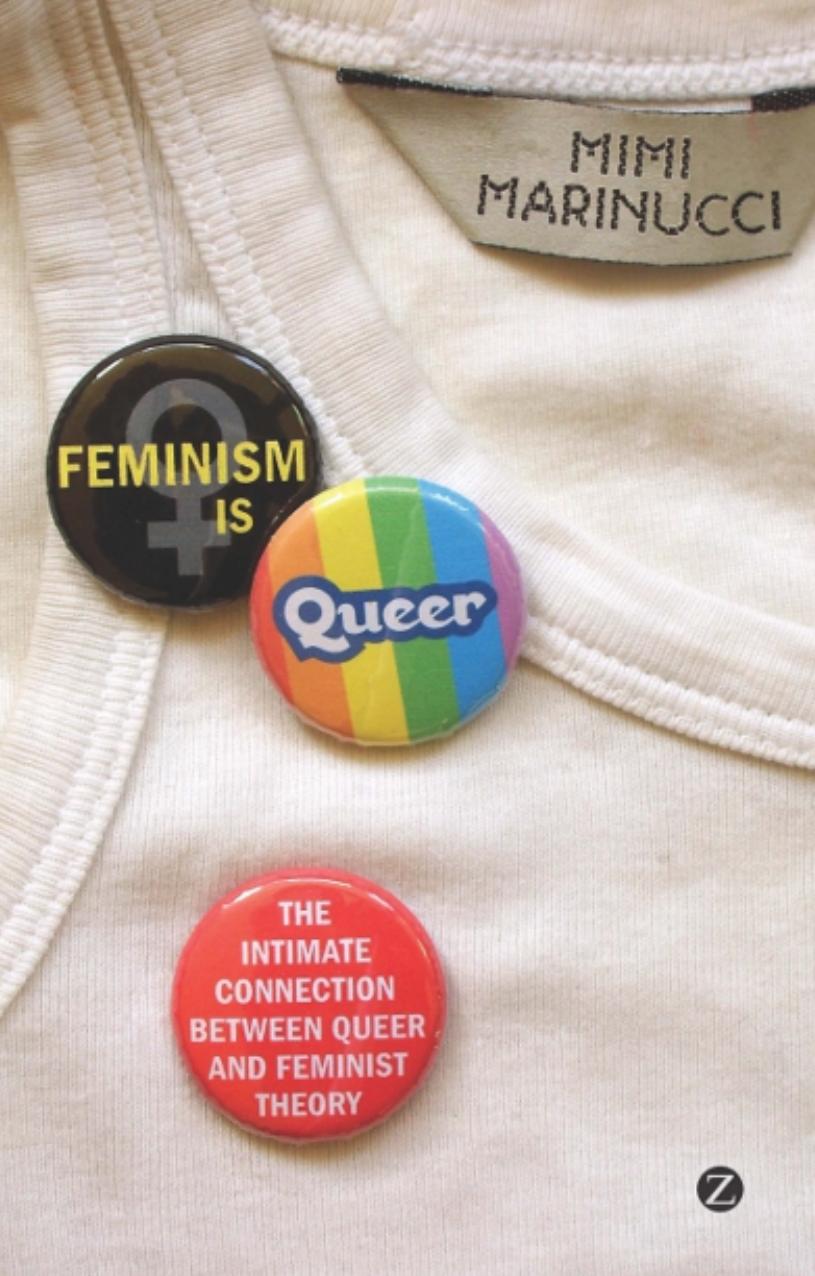
Author:Mimi Marinucci [Marinucci, Mimi]
Language: eng
Format: epub, pdf
ISBN: 9781780322988
Publisher: Zed Books
Published: 2010-11-10T23:00:00+00:00
Following a trend associated with Judith Butler, Lorber refers to gender as an action or a process, rather than a static state or condition. Understood in this manner, gender is not so much who people are but what they do. Indeed, Lorber suggests that ‘everyone “does gender” without thinking about it’ (Lorber, 1994, p.13). Borrowing from the example of drag performance, Butler indicates that, unlike the imitation of the Forms, the imitation that occurs in drag, or any other performance of gender, is an imitation that has no original. There is not something real that gender imitates. What gender imitates is simply other performances of gender, which are themselves mere imitations. Butler remarks that ‘gender is a kind of imitation for which there is no original; in fact, it is a kind of imitation that produces the very notion of the original as an effect and consequence of the imitation itself’ (Butler, 1993, p.313).
What Butler’s notion of performative gender offers is, first, a recognition of the active role that everyone plays in maintaining the hegemonic binary and, second, an invitation to disrupt the hegemonic binary whenever it proves to be too constricting. Thus, instead of attempting to repair the language and meaning surrounding existing categories of gender, sex, and sexuality, there is also the option, as expressed in the title of Butler’s 1990 book, of making ‘Gender Trouble’. Making gender trouble simply means directing attention toward rather than away from the limitations of existing categories, particularly the existing categories of gender, sex, and sexuality associated with the hegemonic binary. Thus, rather than attempting to resolve the dispute regarding gender-neutral language and gender-inclusive language, a meaningful third option is to use the problematic existing terminology, particularly when doing so is most likely to emphasize mismatches within the categories of gender, sex, and sexuality associated with the hegemonic binary. This can also be characterized as a ‘queering’ of the established binaries. As explained by Anamarie Jagose, ‘queer’ refers to ‘those gestures or analytical models which dramatize incoherencies in the allegedly stable relations between chromosomal sex, gender and sexual desire’ (Jagose, 1996, p.3). To disrupt the hegemonic binary, perhaps even in very small ways, serves to ‘queer’ the paradigm. Making ‘Gender Trouble’, rather than attempting to resolve or eliminate such trouble, is thus a viable alternative for dealing with the existence of the sorts of incoherencies that Jagose seems to have in mind.
Download
Feminism is Queer: The Intimate Connection between Queer and Feminist Theory by Mimi Marinucci.pdf
This site does not store any files on its server. We only index and link to content provided by other sites. Please contact the content providers to delete copyright contents if any and email us, we'll remove relevant links or contents immediately.
| Anthropology | Archaeology |
| Philosophy | Politics & Government |
| Social Sciences | Sociology |
| Women's Studies |
Cecilia; Or, Memoirs of an Heiress — Volume 1 by Fanny Burney(32558)
The Great Music City by Andrea Baker(32018)
Cecilia; Or, Memoirs of an Heiress — Volume 2 by Fanny Burney(31956)
Cecilia; Or, Memoirs of an Heiress — Volume 3 by Fanny Burney(31941)
We're Going to Need More Wine by Gabrielle Union(19046)
All the Missing Girls by Megan Miranda(16023)
Pimp by Iceberg Slim(14506)
For the Love of Europe by Rick Steves(14121)
Bombshells: Glamour Girls of a Lifetime by Sullivan Steve(14073)
Talking to Strangers by Malcolm Gladwell(13370)
Norse Mythology by Gaiman Neil(13363)
Fifty Shades Freed by E L James(13239)
Mindhunter: Inside the FBI's Elite Serial Crime Unit by John E. Douglas & Mark Olshaker(9339)
Crazy Rich Asians by Kevin Kwan(9290)
The Lost Art of Listening by Michael P. Nichols(7506)
Enlightenment Now: The Case for Reason, Science, Humanism, and Progress by Steven Pinker(7311)
The Four Agreements by Don Miguel Ruiz(6763)
Bad Blood by John Carreyrou(6621)
Weapons of Math Destruction by Cathy O'Neil(6279)
